The Quarried Body (formerly Hysterectomy BedRock) developed in response to my experience of radical hysterectomy, surgical menopause and recovery. Through photography, drawing, printmaking and site-specific performance, the work explores the experience of diagnosis, surgery, recovery, surgical menopause and beyond.
The project developed in three interconnected phases. The first took place in real time before, during and immediately after surgery in 2021. During this period I created documentary photographs, drawings and prints to document, process and understand the experience. These sit alongside collected medical materials, including MRI scans, hospital letters and surgery notes. Together, they make visible both the exterior of my body—swollen, bruised, stitched and healing—and its interior, revealing the fibroid, uterus and surgically removed organs. They also document my time in hospital and the long period of convalescence that followed.
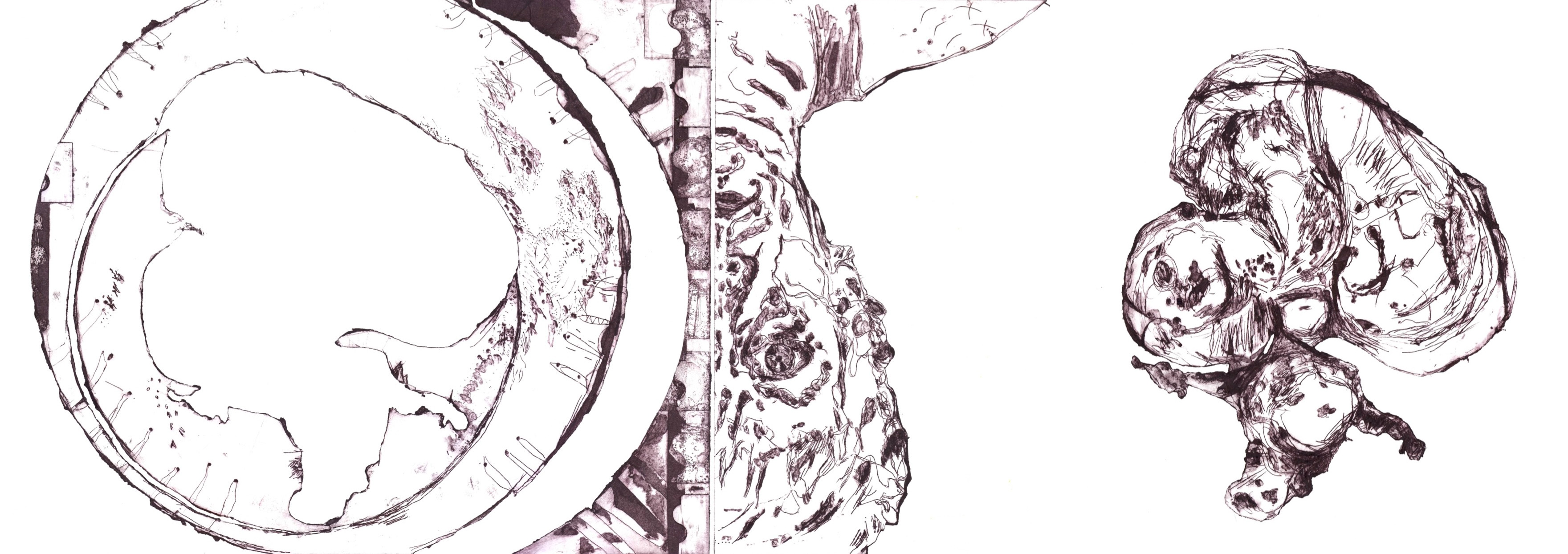
Drawing and printmaking became a way of looking more closely at the experience of surgery and recovery. While making a series of drypoint prints, I used a surgical knife to cut away the printed image of my excised organs, leaving a void within the print. This process drew my attention to absence, removal and spoil, sharpening my interest in the relationship between surgery and quarrying.
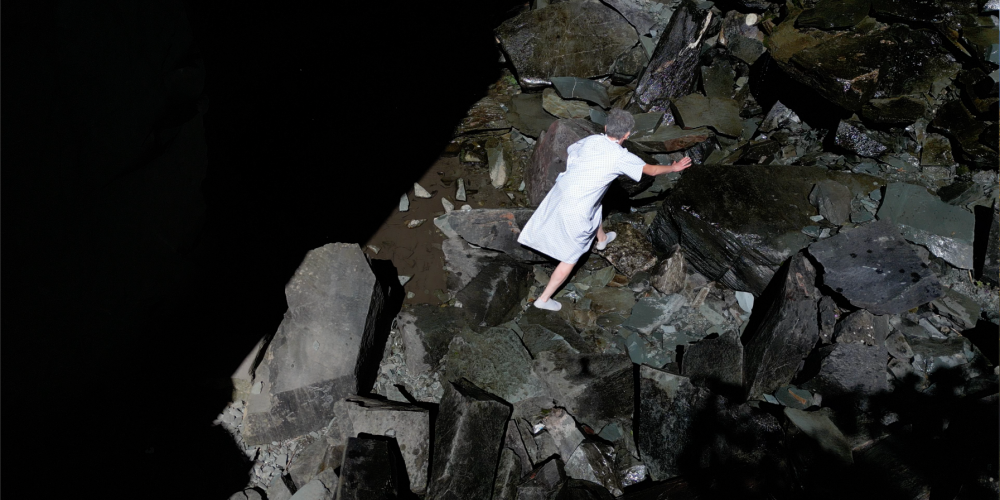
The second phase moved into the abandoned slate quarries of Hodge Close and Cathedral Cave in Cumbria, where I photographed and filmed my body moving through the landscape while wearing a hospital gown. The landscape enabled me to draw a relationship between the excision of parts of the body through surgery and the removal of parts of the landscape through quarrying.
The third phase brought these different strands together into a coherent body of work, combining documentary photographs, medical materials, drawings, prints and scenographic images. Together, they explore the physical realities of hysterectomy through the material processes of cutting, excavation, absence and transformation.

_-_MRI_Scans_of_my_abdomen_showing_the_fibroid_and_uterus.jpg)
_-_MRI_Scans_of_my_abdomen_showing_the_fibroid_and_uterus.jpg)